Friday, March 13, 2020

Mobile phone sales will fall 25% to 35% in April - June.

Mobile handset sales in the country are set to fall 8-15% in the current quarter and by up to 30% in the quarter ending June when the full impact on supply chain due to the Covid-19 outbreak will show up, analysts say.

Market intelligence firm TechArc has predicted a 25-30% on-quarter decline in April-June sales as inventory replenishment will not happen at the desired rate owing to the supply chain issue starting end of February, while International Data Corporation (IDC) has lowered its shipment estimates for the current quarter ending this month.

CyberMedia Research (CMR) said handset shipment in the first quarter of the calendar year could see a potential decline of 8-10% while there is the possibility of a full-blown sharper impact on the smartphone market in the second quarter.

According to CMR’s numbers, both smartphone and feature phone shipments grew in January and had remained stable through February 2020. “Thus far, smartphone brands have been able to sail high, thanks to an adequate stock of smartphone components in anticipation of the Chinese New Year,” said Prabhu Ram, head of the industry intelligence group at CMR.


Thursday, March 12, 2020

BSNL-MTNL merger a distant dream synergy possible


The Department of Telecommunications (DoT) plans to finalise policy decisions, required to enable state-run telecom firms Bharat Sanchar Nigam Limited (BSNL) and Mahanagar Telephone Nigam Limited (MTNL) to combine and coordinate their operations without a merger in the near future. A top forming committee under DoT Secretary R Chandraskehar has been set up to oversee the required policy decisions and institutional framework for an alliance between the two public sector undertakings which have been incurring losses.
Another permanent committee has been formed to prepare a suitable plan for implementation of the report by an earlier committee in a time bound manner which has favoured synergy between the firms. This committee would report to the top committee, which would provide overall guidance and direction confirmed a senior official from DoT.
However, the merger has been put on hold now because of various issues. The synergy would allow these firms to cut costs with their falling revenues and profits. It would also allow their subscribers to roam freely on each other’s network, with the exception of interconnect charges. Interconnect charge is paid by one operator to another operator for connection of calls in that network. The synergy among other firms including ITI, CDoT and TCIL with BSNL and MTNL will also be explored. The decision on the combination is expected soon.Since the last three-four years, DoT has been considering the merger to allow them to work as one seamless organisation. But due to stiff opposition from the unions and other glitches such as MTNL being a listed company, the proposal was put on hold. BSNL and MTNL had last year started discussions on synergising their operations in the enterprise segment.
BSNL had posted a loss of Rs 1,823 crore in the financial year 2009-10. One reason for the decline was 49 per cent of the revenues went towards staff salaries. The company’s plan for giving voluntary retirement scheme (VRS) has been pending with DoT. The need to reduce workforce was first mooted by Sam Pitroda, advisor to the Prime minister on infrastructure, who had suggested BSNL should reduce its employee base by about 100,000, with schemes such as VRS. MTNL has also been posting losses since quite some time now, due to retirement benefits, high wage bill and dipping revenues as there is a stiff competition going on in the telecom industry. It has asked DoT to clear a VRS which will be offered to about 15,000-20,000 employees.

Due to Coronavirus-Indigo sees impact on earnings


Due to Coronavirus-Indigo sees impact on earnings


COVID-19, which was first detected in Wuhan city of China last December, has spread across the globe, forcing airlines to suspend flights and ground aircraft. Indian carriers have limited exposure to China and Southeast Asia.

InterGlobe Aviation Ltd., the operator of India’s largest airline IndiGo, said it expects its quarterly earnings to be “materially impacted” as bookings have fallen over the past few days. “Daily bookings are down 15-20 percent week-on-week over the past few days. 
Indigo expects the coronavirus  (COVID-19) crisis and depreciation of the rupee to hit profit in the fourth quarter. Because of the spread of COVID-19 in the country , IndiGo, has issued the profit warning following a shortage in bookings.

Indigo cancelled flights to China and Hong Kong and reduced frequency to certain other Southeast Asian markets. Over the past few days, 15-20 per cent decline is seen in daily bookings. This is because Flight occupancy individuals and companies canceled events and postponed travel. Last-minute fares, too, have declined 20-25 per cent on key metro routes over a dip in demand.
InterGlobe Aviation, which runs IndiGo, had reported a threefold increase in its pre-tax profit to Rs 556 crore in the third quarter of financial year 2019-20 (FY20) on strong revenue growth.
While overall international operations contribute around 25 per cent of IndiGo’s revenue, the share of China and Southeast Asia markets was limited. Flights have been cancelled and bookings deferred following visa restrictions imposed by Saudi Arabia and Qatar, while Kuwait has suspended all flights to/from India for a week.


Monday, March 9, 2020

PhonePe partners with ICICI Bank, to continue alliance with Yes Bank


PhonePe on Monday said it is actively working on adding more payment service provider (PSP) partners to offer its users more options for UPI transactions, even as the Flipkart-owned company continues to engage with crisis-ridden Yes Bank.

PhonePe had seen a service outage for nearly 24 hours, which started immediately after the RBI placed Yes Bank on moratorium on March 5. Its team worked overnight with the National Payments Corporation of India (NPCI) and new UPI partner, ICICI bank, to ensure all its services are up within a day."We were actively working on adding other PSP partners, this is also as per the recent NPCI advisory... PhonePe will shortly be launching an additional VPA (virtual payment address) with ICICI Bank," PhonePe founder and CEO Sameer Nigam told PTI.
While PhonePe declined to comment on the banks it is in talks with, sources said PhonePe is engaged in dialogue with State Bank of India, HDFC Bank, Axis Bank and RBL Bank.
Nigam said services on the PhonePe app were fully resumed on March 6 for all users and merchant partners, with ICICI bank as our new banking partner.

Friday, March 6, 2020

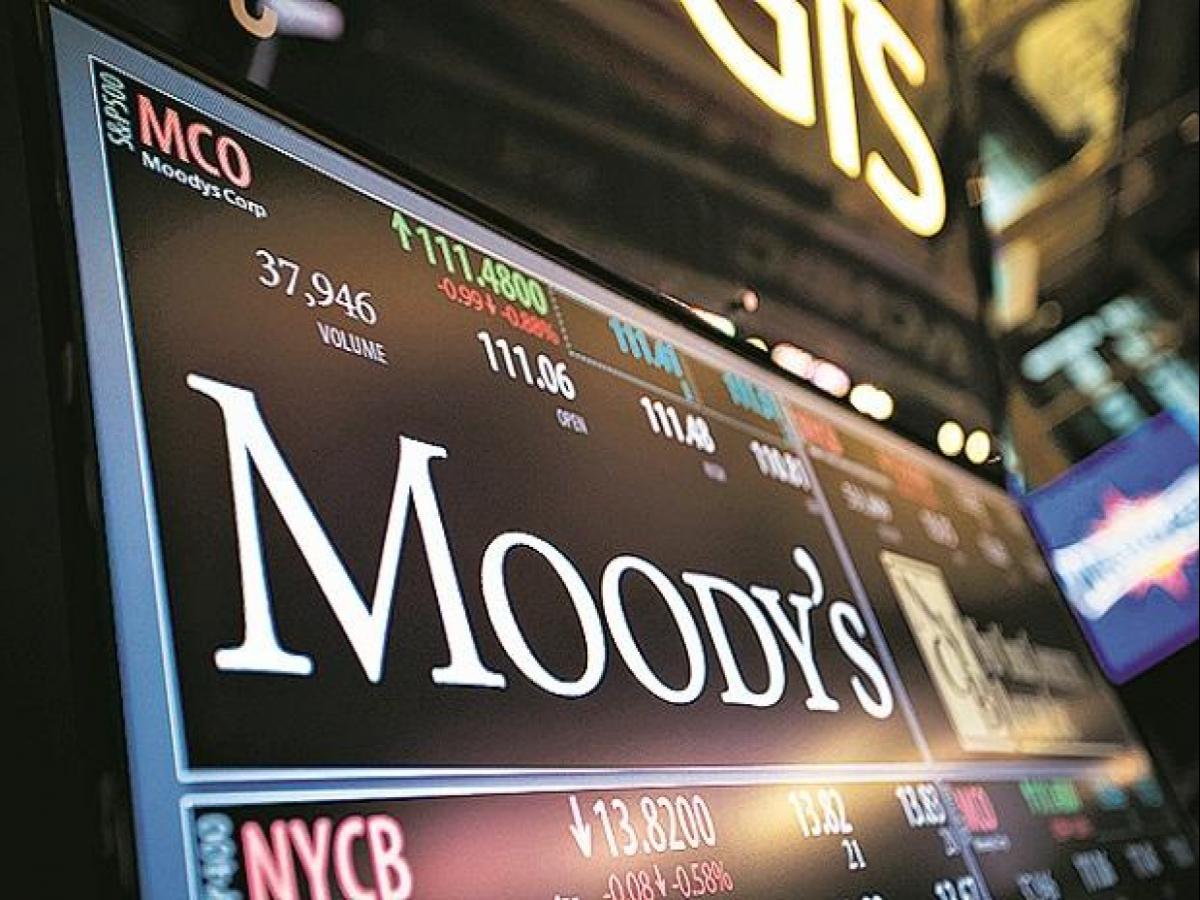
Moody's again slashes India's growth projection for 2020 to 5.3%


In less than a month’s time, rating agency Moody’s Investors Service has revised downward its baseline growth projections for India to 5.3% for 2020 from 5.4% earlier, cautioning that an extensive and prolonged slump as a result of COVID-19 outbreak will reduce growth in Asia’s third largest economy to 5% during the same calendar year.
On 17 February, the rating agency had reduced India's growth projection to 5.4% from 6.6% earlier for the calendar year 2020.
The latest revision, which is part of the rating agency’s latest “Global Macro Outlook" said the global spread of the coronavirus is resulting in simultaneous supply and demand shocks. “We expect these shocks to materially slow economic activity, particularly in the first half of this year. We have therefore revised our 2020 baseline growth forecasts for all G-20 economies. We expect these countries, as a group, to grow by 2.1% in 2020, 0.3 percentage point lower than our previous forecast," it added.
Moody’s also lowered its 2020 forecast for China's growth to 4.8% from its previous estimate of 5.2%. For the US, it now expects real GDP to grow by 1.5% in 2020, down from the previous estimate of 1.7%.

SBI Cards IPO subscribed 26 times despite tough market conditions


SBI Cards and Payment Services’ initial public offering (IPO) has figured out how to pull in offers worth Rs 2 trillion, regardless of testing economic situations. This has made it among the most bought in contributions in total terms. The 100- million offer contribution created near 2.7 billion offers (26x). The high networth individual (HNI) segment of the IPO was bought in 44x, with the retail partition being bought in 2.5x. Employee segment reported 4.7x subscription, while shareholder group was subscribed 25x – making it an unusual case where employee and shareholder segments received higher subscriptions than retail segments.
Shareholders of parent State Bank of India (SBI) were eligible to apply through the ‘shareholder’ category. The institutional portion of the IPO, which closed on Wednesday, had garnered 57x subscription. “Despite tough market conditions, the IPO has done well as the SBI Cards are a unique high quality brand from the powerful SBI stable. The business model has echoed the best institutional investors in the world”, said Salil Pitale, Axis Capital’s joint Managing Director and Co-managing director. The key factors, he said, were good productivity, high return ratios and a strong growth potential. Some brokerages had suggested subscribing to the SBI Cards IPO for similar reasons.
SBI Cards are well-placed to benefit from the rising trend of digital payments and e-commerce, given its dominant position in the credit card industry and fast parentage. Strong growth, stable asset quality and high return ratios provide comfort and justify the valuation of the premium. Furthermore, being the first to be listed in the category,it could generate a high interest from investors, Said a note from Motilal Oswal. SBI Cards deliver investment opportunities with high profitability in a specific business model. Sustainability of higher business growth and solid return ratios supports the business premium valuation”, ICICI Direct added. Given the massive over subscription, SBI Cards shares are priced at the upper end of the Rs.750-755 price band per share. At the top end, the post- issue market capitalization of SBI Cards operates at about Rs.71,000 crore making it the 38th most valuable company in India.        

India may airfift components from China to help tech industry

India plans to airlift components from China to help local tech industry

India is planning to backstop its growing electronics sector by arranging to airlift components from China, to help the sector amid corona virus out break which impacted Chinese supplies. India,s federal technology ministry has asked electronics and smartphone industry lobby to draw up a list of components made in china which then can be airlifted. China is slowly getting back to the work after a extended shut done due to the corona virus, but it is still a gaping with the range of products and delay in logistics delays. 
The emergency airlift plans leads the inter connected nature of supply chains and the continued dependence on China for key goods produced there. our country is still highly dependent on China for components such as camera modules and display screens.
Electric vehicle (EV) manufacturers may have to pause the production in April and May , since china is the only source for some of the components for the manufacture. China has reported the highest number of infections and death from the corona virus , or COVID - 19. This leads to forced several industry to pause operations, and the import of raw materials in some of the industries. 

Lack of truck drivers, a proliferation of road check points and the shortage of workers at the Chinese ports have slowed shipments even for the parts that are still being produced. Air cargo firms have also reduced services in response to crew health concerns and uncertain demand. China is the India's biggest training partner, but India's imports of Chinese goods contracted in February to their lowest level in nearly four years. the ministry of heavy industry and public enterprises has prepared a list of parts for petrol, diesel and electric vehicles to be air lifted from China. the list was prepared after consultation with automakers and society of Indian automobile manufactures (SIAM).

A Govt adviser said that,India's embassy in China is also helping coordinate an airlift of drug. ingredients from China